
Expert Ant Control Melbourne – Tom’s Pest Control Services
Did you know that the largest ant’s nest ever found was over 5900 kilometres wide and they can travel 100m away from their nests in search food? Ants are mostly active once the sun is out.
Ants have an important role in the ecological balance, but they can be a nuisance to humans and our living space. They are one of the most hardworking creatures around the world. Hence, it is hard to get rid of them completely.
Are you struggling with infestation issues and searching for ant removal services to protect your building, food products, and yourself?
Tom’s Pest Control Melbourne has your back. We are the primary destination for ant pest control for Melbourne’s residents and businesses. With advanced ant infestation pest control techniques and quality services, we have helped thousands of homeowners and businesses to safeguard their health and wealth.
Ant Species We Control
More than 4000 ant’s species are found in Australia, and most of them don’t harm humans or never show up in human habitats. Therefore, these ants are technically not pests and do not demand the need for any ant fumigation and control.
However, if a large volume of ants is crawling all around your property, it can be a challenge. Tom’s Pest Control Melbourne offers various ant treatments and ant control services for all your needs, including ant fumigation. The major ant species that you can see in Melbourne and Victoria are the following:
Each of these ant species has unique characteristics, nesting sites, feeding preferences, and habits. Ant colonies comes in different sizes from tiny colonies to massive ones as well. Due to the size of the ants, they can infest your house quickly and seamlessly even through small holes. Most of the ants live in permanent colonies and rarely change their colony sites.
Understanding the ant species plays an important role in drafting an ant treatment or ant fumigation plan. According to the ant species, we choose the specific plan whether it is fire ant control, funnel ant control, or other varieties. Call Tom’s Pest Control today for an immediate ant removal treatment in Melbourne.
Why Should You Go for Ant Treatments?
Timely control of ants on your premises helps to save you from a range of issues. Here are some reasons why you should seek out ant control services for your property:
Did you know that bull ant bites are highly painful and can feel like 200 bees’ stings at once? Therefore, as soon as you see these insects around your property, call Tom’s Pest Control for a fully guaranteed ant control treatment in Melbourne.
Ant Infestation Pest Control Procedure
At Tom’s Pest Control, we analyse the infestation, understand the reasons behind it, and exterminate them using strategic plans. Additionally, we also help you to avoid infestation further in the future as well. Therefore, we have established a standard four-step process for controlling the ants at the various property types of our customers.
Ant Treatment Inspection
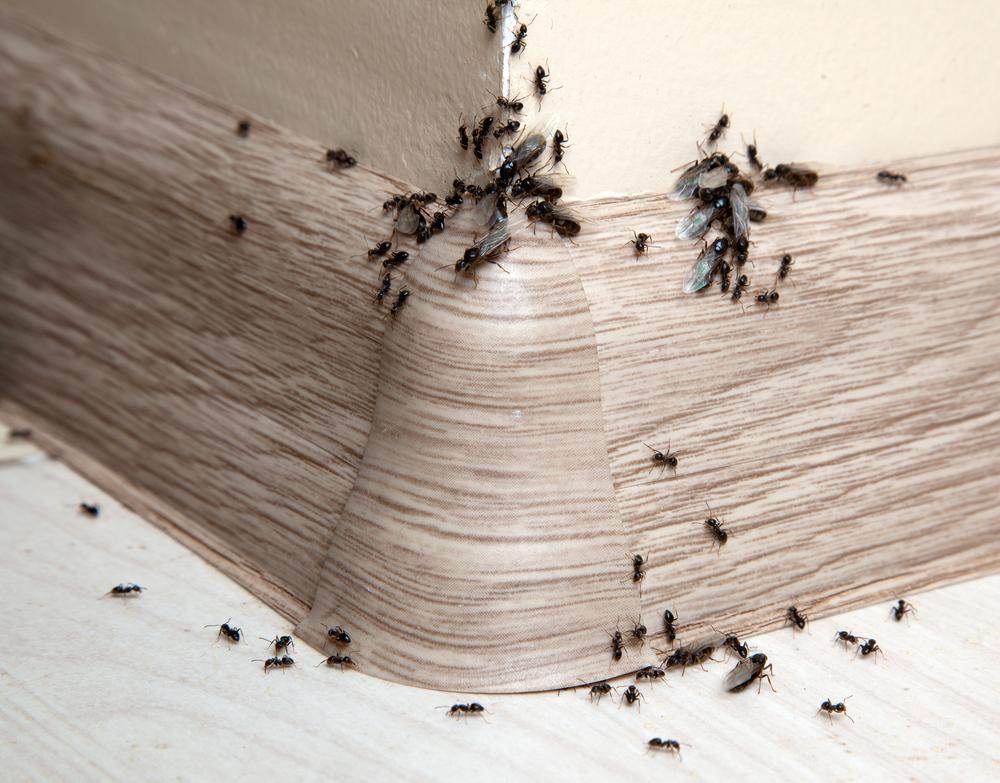
After assessing the infested property, our professional pest control specialists examine the location and behaviour of the ants. We identify the ant species, entry points, nest locations, colony size, colony lifetime, and pheromone trails to completely wipe the ants out of your property.
Ant Control Treatment Plan
We will draft a customized ant control plan to save your property from the pest ants. The plan has detailed procedures and instructions to inhabitants during the process as well. Based on the building design and infestation, we treat the roofs, patios, perimeters, subfloor spaces, garden beds, and other areas.
Eradication Procedure
Based on the ant treatment plan, our professional pest control specialists will use sprays, insecticidal dusts, ant baits, insecticides, gels, and granules to control ants on your premises. For interior locations, we use several treatment procedures, including skirting boards, light spot spraying, and more.
Tips For Ongoing Prevention
A one-time treatment won’t give you permanent results, but prevention steps can ensure that ants do not return after the ant infestation pest control or ant fumigation. In addition to providing general tips, we will also give you specific measures based on our inspection and findings.
The following general tips can help you to reduce the likelihood of ant infestation issues on your property:
- Store food in tight containers
- Inspect and clean any food and drink spills after every meal
- Wash the utensils, bottles, and cans after the use
- Seal access points such as cracks on the floor and around doors and windows
- Pick up the pet food at night
Why Tom’s Pest Control for The Best Ant Control in Melbourne?
Our years of experience delivering high quality ant control services have made us the best ant control company in Melbourne. We have numerous features that makes us a great fit for everyone needs like:
We are committed to creating a long-term relationship with each of our customers and providing a completely transparent, seamless service experience. You can also get an obligation-free quote from us for your ant control requirements.
FAQs
Are White Ants Different From Termites?
That’s correct – They are technically the same thing. Most people refer to them as white ants due to misunderstanding. The term termite is used when treating professionally. Installing a strong barrier can keep termites away from your home, where they can do significant structural damage. An insurance company won’t pay for termite repairs because there is no sign of activity in that area.
General ants are annoying, but they can also cause harm to your house. Some irritating insects bite very painfully, necessitating specialised spray treatments to get rid of their ant colonies inside or outside the structure where they dwell.
At Tom’s Pest Control Melbourne, we value convenience. Thus, we provide our consumers with the most effective and dependable treatment alternatives. We also provide a no-obligation quotation that can address your ant problem quickly.
Whether you choose mites control treatment or beetle pest control method, the overall effect of the pest control treatment will last for approximately 3 to 5 months. However, with Tom’s Pest Control, you will get value for your money invested in the treatment. Additionally, we also provide suggestions for future prevention of pests in your property.
What Methods Do You Use For Ant Control?
You can effectively control ant infestations by using bait stations. Set them out anywhere you see ants, and “If any remain around the house, try a few different brands until one becomes appealing.”We employ a variety of strategies to get rid of ants. Some of these ways are more effective than others, but they all have the same goal: to get rid of the ants and get them out of your house.
Baiting is the technique of luring ants into a trap using food. Once the ants have consumed the bait, they will be killed by the poison contained within the trap. We will visit your home and put up a machine that generates pesticide fog. This fog will penetrate gaps and crevices, killing the ants.
Whether you choose mites control treatment or beetle pest control method, the overall effect of the pest control treatment will last for approximately 3 to 5 months. However, with Tom’s Pest Control, you will get value for your money invested in the treatment. Additionally, we also provide suggestions for future prevention of pests in your property.
How Much Does Ant Pest Control Cost?
While house staging is crucial, insect management should not be disregarded. Ant infestations may cause significant structural damage to properties, so if you are selling, be sure ants are exterminated before potential buyers start looking.
Choosing an ant control strategy need not be expensive. All you need is some time and effort for investigation so we can make suggestions on what will serve your requirements the best. These plans include expert solutions, such as spraying or catching them in traps.
Thus, there is no chance of any bothersome little insects returning after being properly dealt with in the first place. We estimate that it may cost between 150 and 200 Australian dollars per month, depending on how frequently they appear.
Whether you choose mites control treatment or beetle pest control method, the overall effect of the pest control treatment will last for approximately 3 to 5 months. However, with Tom’s Pest Control, you will get value for your money invested in the treatment. Additionally, we also provide suggestions for future prevention of pests in your property.
What Guarantees That The Ants Will Go and Not Come Back?
Despite your best efforts, we know that an ant may reappear at any time. We thus encourage clients to follow the preventative advice given by experts to avoid experiencing problems again and provide a complete service guarantee on our services for six months.
These pests may cause serious harm in addition to being an annoyance to all homes. The list goes on from ruining your food and house. You might want to seek expert aid as soon as possible when considering how bothersome these critters attack or sting humans in their environment.
Our exterminators will design a plan that uses practical solutions for you based on their knowledge of ants, their causes, and safe methods for removing them from your home or office.
Whether you choose mites control treatment or beetle pest control method, the overall effect of the pest control treatment will last for approximately 3 to 5 months. However, with Tom’s Pest Control, you will get value for your money invested in the treatment. Additionally, we also provide suggestions for future prevention of pests in your property.
How Long Does It Take To Be Entirely Free From Ants?
Once you have an infestation, ants can be challenging to get rid of because they swarm. An ant infestation can usually be controlled within a week or two with little diligence and a mix of indoor and outdoor bug management treatments. To avoid their reappearance, follow-up measures are essential.
Because ants are gregarious insects, ant baits are effective as a therapy inside. Unfortunately, they will share the bait with the colony when they return, contributing to its demise. Therefore, insect traps must be routinely refreshed and checked to ensure they are still working effectively. The fact that baits are reasonably mess-free and simple to put is an added benefit.
In short, entirely getting rid of ants from your house could take some time. Hiring a pro gives you the best chance of effectively eliminating an ant infestation. With many years of expertise, Tom’s Pest Control Melbourne is an ant pest control expert in your area. We pledge to come back for further treatment if you continue to observe ants in your home after treatment.
Whether you choose mites control treatment or beetle pest control method, the overall effect of the pest control treatment will last for approximately 3 to 5 months. However, with Tom’s Pest Control, you will get value for your money invested in the treatment. Additionally, we also provide suggestions for future prevention of pests in your property.
How Do You Remove (Control) Argentine, Carpenter, Fire, And Pharaoh Ants?
An enormous Argentine ant colony may cover many homes. As a result, you must always be on the lookout for re-infestation from an untreated neighbour’s home. Along with treatment, we advise that you prevent any potential nesting places, such as brick or lumber piles, crevices in the pavement. Fill up any crevices or fractures that allow ants from the outside to enter.
However, it’s crucial to locate and eliminate the carpenter ant colony since if you kill the one inside the home, the parent will start another colony somewhere. So, if Tom’s Pest Control Melbourne discovers a carpenter ant issue, we will immediately look for the parent.
Baits made specifically for fire ants and other chemicals intended for the nest are typically used as therapy. However, if you want to maintain their numbers to a minimum, you’ll need to treat them frequently. Lastly, due to their ease of adaptation to different environments, pharaoh ants are difficult to control. Thus, they must be lured out until the nest is empty.
Whether you choose mites control treatment or beetle pest control method, the overall effect of the pest control treatment will last for approximately 3 to 5 months. However, with Tom’s Pest Control, you will get value for your money invested in the treatment. Additionally, we also provide suggestions for future prevention of pests in your property.
Does General Pest Spray Always Control Ants?
An insecticide known as general pest spray is frequently used to eliminate various pests, including creepy and crawly things. Ants are examples of typical household pests. A general pest control spray treatment is given to the perimeter of your home every three months or every quarter to get rid of these household pests.
This technique is great if you want to protect your property against these destructive pests but are not dealing with a significant infestation. Various general substances, such as elder leaves mixed with water, can be used to make general insecticides at home. This natural pesticide can be used to tackle pest issues brought on by aphids and caterpillars.
Garlic spray, which can be prepared at home using garlic, mineral oil, water, and soap and is effective against various pests, is another option. You may also create a general pest spray using crushed and unpeeled garlic cloves, liquid paraffin, and melted oil-based soap.
Whether you choose mites control treatment or beetle pest control method, the overall effect of the pest control treatment will last for approximately 3 to 5 months. However, with Tom’s Pest Control, you will get value for your money invested in the treatment. Additionally, we also provide suggestions for future prevention of pests in your property.
What Can You Do If You Notice Rain After The Ant Treatment?
You don’t have to worry if it rains after the ant control treatment. Thermidor is the medication we use to cure black ants. After your Thermidor ant treatment has dried (10–20 minutes), a little rain may be helpful.
Rain will bring out the ants and bring them into touch with the chemical since Thermidor includes a bonding ingredient that prevents it from being washed away by rain.
We offer a 6-month guarantee on our Thermidor ant treatment, and if there are any problems at any time, you may phone us, and we’ll be happy to come and address them.
Whether you choose mites control treatment or beetle pest control method, the overall effect of the pest control treatment will last for approximately 3 to 5 months. However, with Tom’s Pest Control, you will get value for your money invested in the treatment. Additionally, we also provide suggestions for future prevention of pests in your property.
What Steps Can I Take To Prevent Ants From Entering My Home Or Premise?
Leave no moist residue. Ants typically migrate toward water sources throughout the summer to escape the dry heat. It is now necessary to mend the dripping faucets and pipes and to keep an eye on all the moist places of the house, such as the bathroom and underneath the sink.
Clean your home regularly. Ants typically go out in search of food. If they happen to come across any crumbs or drips of sweet liquids, they will carry them back to their anthill, where you will have an infestation by nightfall.
The easiest method to avoid this is to have an airtight container for every ingredient, especially the sweet ones, and a polished and clean surface. In addition, since ants largely rely on their sense of smell, you can perfume the area with peppermint, eucalyptus, or any other strongly smelling product to deter them.
Whether you choose mites control treatment or beetle pest control method, the overall effect of the pest control treatment will last for approximately 3 to 5 months. However, with Tom’s Pest Control, you will get value for your money invested in the treatment. Additionally, we also provide suggestions for future prevention of pests in your property.
How To Treat Big-headed Ants?
Big Headed ant colonies include minor and major workers, distinguished by size. Minor workers are smaller than major workers, measuring about 2mm in length and are far more numerous. Major workers can grow to be up to 4mm long. The Big Headed Ant is a dull-coloured, pale to a reddish brown ant.
Suppose you have found the large-headed ant colonies’ nesting places. In that case, you can drown them with a cypermethrin product like Demon WP or Cyper WP. If you can’t discover the colonies, use ant baits like Maxforce Complete Granules and Gourmet Liquid Ants Bait in ant bait stations.
Additionally, remove any nests or tunnels in your lawn immediately. If you suspect a significant Big Headed Ant infestation, contact our expert team of pest control specialists.
Whether you choose mites control treatment or beetle pest control method, the overall effect of the pest control treatment will last for approximately 3 to 5 months. However, with Tom’s Pest Control, you will get value for your money invested in the treatment. Additionally, we also provide suggestions for future prevention of pests in your property.
Request a Quote
Protect Your Property From Ants Today
Call us today on (03) 9034 5957 to connect with our extermination specialists; let us know your requirements and get a free quote. Alternatively, use our contact form to provide to leave your message and get an obligation free quotation.


